A Short History of Clanfield
From a tiny farming community around the medieval parish church to a village of over 6,000 — how Clanfield grew.
The name Clanfield comes from Old English and means "cleared field" — a fitting origin for a village that began as a small farming community on the chalk of what is now East Hampshire.
Medieval beginnings
The heart of old Clanfield is the church of St James, which dates from 1305 and was rebuilt in 1875. It contains two ancient medieval bells. For centuries the village was a modest rural settlement centred on the church, the pond and the surrounding farmland.
A village that grew
Clanfield's population tells the story of its transformation. In 1929 the parish recorded just 129 residents. By the late 1940s that had grown to almost 500, and by 1998 to over 4,500 with nearly 1,700 households. At the 2021 census the population stood at 6,015 — a 30% increase on 2011, driven by new housing.
Today locals distinguish between "Old" Clanfield, settled for centuries, and "New" Clanfield, largely built over the last sixty years.
Landmarks of the old village
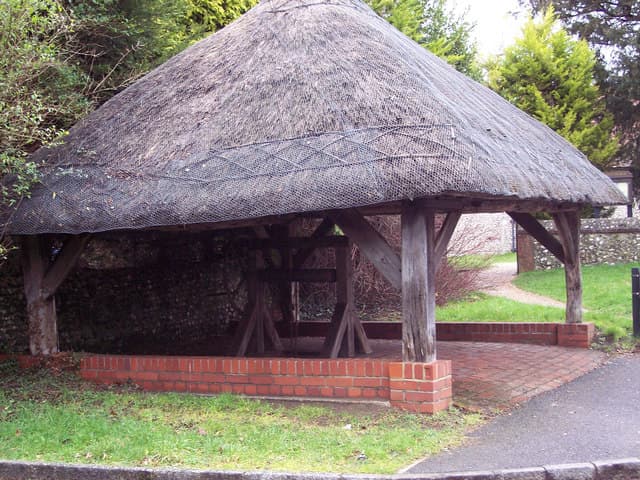
Beyond the church, the old village retains a restored village pond, a thatched village well and several thatched cottages, including Smithy Cottage. The Rising Sun pub, next to the church, famously earned its place in local legend as "the pub that was built in one day" in 1969.
A landscape protected
The undeveloped land to the north of the village, once designated an Area of Outstanding Natural Beauty, is now part of the South Downs National Park, which borders Clanfield on three sides.
Sources: Clanfield, Hampshire — Wikipedia.
Share this article